
Blogs
Listening to Practitioners: Supporting People Who Self-Harm in Emergency Departments
Insights from a qualitative study within the ASSURED trial. By Aurelia Hodes, University College London.
Background:
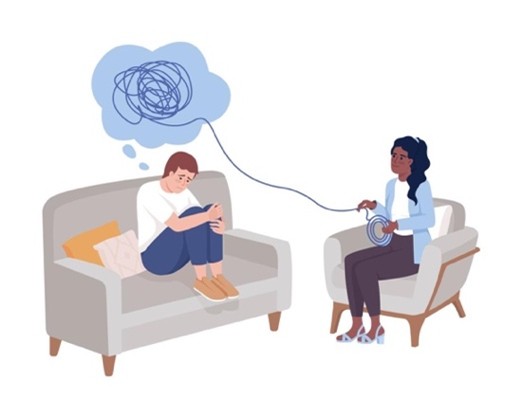
Self-harm can sometimes be a way of coping with overwhelming distress. For many people who self-harm, the emergency department (ED) is the first place to go for help. But EDs are often busy, noisy, and focused on urgent physical care. As such, many people leave feeling unsupported and often practitioners feel powerless. This preliminary study, carried out as part of my MSc project, explored practitioners’ experiences of delivering a brief psychological intervention for people who self-harm in Emergency Departments (EDs), as part of the ASSURED trial.
Why it matters:
This study is shaped by practitioners experiences, and can hopefully be used to strengthen ED interventions for mental health in the future.
The ASSURED intervention included:
• A narrative interview, allowing individuals to tell their story in their own words
• A collaboratively developed enhanced safety plan
• Solution-Focused Brief Therapy (SFBT), which aims to build on strengths and focus on achievable next steps
Sixteen practitioners at several hospital sites in England were interviewed about training for and delivering the ASSURED intervention. Common themes and patterns were identified to explore their perspectives on delivering the intervention, to understand what helped and what challenges they faced.
Results:
Four main themes emerged after analysing the interviews:
1) Challenging working conditions
The ED environment made therapeutic work difficult, as it is a busy, noisy environment. Most sessions therefore ran online, which many felt reduced distress and improved flexibility. However, some practitioners felt that working remotely made it harder to pick up emotional cues that help build rapport. Balancing the intervention with high workloads, and immediate risk management was a consistent challenge.
2) The intervention created space for hope
Practitioners appreciated the clear structure and containment provided by the manual. They valued the emphasis on human connection and continuity, with patients seeing the same practitioner across sessions. Core components were seen as helpful: the narrative interview offered space to talk and feel validated, the safety plan made coping steps concrete, and the solution-focused work supported hope and strengths.
3) Challenges in learning a new intervention
Some elements felt too rigid or repetitive, especially when growth between sessions was limited. Practitioners also found that adapting for neurodiversity, substance misuse, or significant physical illness sometimes required more tailoring.
4) Personal and professional development
Many practitioners reported growth in skills and confidence, and led to some leaving sessions “on Cloud 9” after seeing change. Others felt under-prepared or outside their comfort zone for parts of the model, highlighting a need for ongoing supervision and training refreshers.
Strengths and limitations:
The in-depth interviews with practitioners allowed them to reflect openly about their experiences. However, those with the time and capacity to take part may not fully represent practitioners, as overstretched staff were not as likely to participate.
Implications and next steps:
• Flexibility is key. Session timing, pacing and language may need adapting for different individuals
• Practitioners require sustainable caseloads, protected time to deliver interventions and consistent supervision.
• Training should include refreshers from time to time, so staff stay confident and consistent in their care.
• Small moments of empathy can meaningfully support people during crisis.
• Future research could explore whether staff confidence and relationships with patients influence outcomes.
Conclusion:
EDs are high-pressure environments, but they are also critical points of contact for people who self-harm. Practitioners valued intervention approaches that allow space for patients to be heard and create space for hope. To deliver such interventions effectively, it is important to support staff too.